Articles in category: "Buy It"
The Secret
Be The First To Leave A Comment
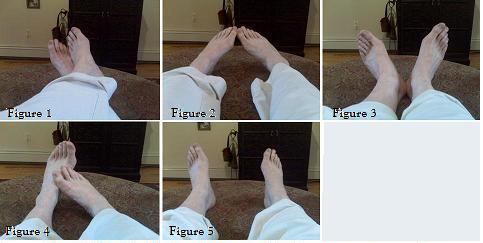
Fig 1-5, An unidentified broker documents his time at a recent open house.
Pssssst. Hey you. Yeah you: Mr. Buyer. Want to know a secret? Come over here. A little closer. Closer. Clooooser. Now listen carefully. We are not very busy. No- scratch that, we are not busy at all…OK, it’s dead out here. August is always dead. Really dead. Our open houses are poorly attended. Our blackberries aren’t buzzing. Our sales figures are down. Our sellers are not happy, so we are not happy. Our sellers are worried. We are worried. Our sellers want to make a deal. We want to make a deal.
Are you still listening? This is an opportunity for you. Here’s a suggestion: this year, why don’t you and your brethren close up the beach house early and, instead go shopping for a real estate bargain?
Here’s another secret: about two weeks after Labor Day, everything changes. Things pick-up, office phones ring, websites get hits. More of you go to our open houses. More of you make offers. And more of you actually purchase a home. How do I know? Just like August is always slow, September is always better.
So make a deal while you can - the Brooklyn Real Estate Sale ends September 14th!
What Happens Now?
4 Comments
Often after someone has either made or accepted an offer, I’m asked, “what happens now?” Below is a chronological list of how things should proceed after an Accepted Offer.
- Pick an attorney. It’s pretty tough, in New York, to complete a real estate transaction without an attorney. It is also pretty tough to get on their calendar. So, I highly recommend that you do this before you put your home on the market or before you start shopping for a new one. A good lawyer is your advocate throughout the transaction and if you are a buyer, often the only person who has your best interests in mind. I personally would not buy or sell real estate without one and you shouldn’t either. Rules for picking a lawyer are the same as they are for picking any professional: get a recommendation if you can and pick someone you trust and feel comfortable with.
- Start the attorneys communicating. The person on the other side of this transaction will have an attorney as well (if they don’t, good luck getting into contract). You’ll want to insure that both attorney’s have each others contact information. What good agents and brokers usually do is give each attorney a one page Deal Sheet. The Deal Sheet contains the contact information for the buyer, the seller, their attorneys, the sales price and the escrow down payment (this is usually 10% of the purchase price and is different from your down payment for financing). If you are not working with a broker, then just put you’re your own deal sheet together. You should send the deal sheet to each lawyer within a day of the accepted offer. A well organized Deal Sheet will save a busy lawyer time and get you to contract sooner rather than later.
- Seller’s attorney will send out a contract to the buyer’s attorney. The attorneys will probably negotiate a bit on some of the details, but they usually come up with a document that they will let their clients sign. You really want to make this happen within two weeks -before the person on the other side of this transaction changes their mind.
- Sign the contract. You will meet with your attorney who will advise you about the specifics of the contract. You should ask any questions you have here and if all goes well you’ll sign the contract. If you are the buyer you will also write out a check -usually 10% of the purchase price- which will be deposited in an escrow account.
- Choose a mortgage broker or bank (buyers only). Like picking an attorney, this is something I recommend you do before you even start shopping for a place. Most lending institutions will issue you a pre-qualify letter which will state that you are capable of borrowing up to X amount of dollars. This is a good way to prove to a seller or broker that you and your offer should be taken seriously.
- Appraise the Property. When you boil it all down, banks only judge a transaction by two criteria. Will the buyer pay back the loan? And is the property worth enough to justify the loan? To determine the latter, the bank or mortgage broker will hire a licensed appraiser to estimate the value of the property.
- Bank issues a commitment letter. After the bank has done its due diligence on the buyer and the property, it will issue a commitment letter. This is the letter that says the buyer is approved for the mortgage. It states the interest rate, amount, and term of the loan (among other things). Once this letter is received you can schedule the closing.
- Schedule the date of the closing. The seller, the buyer, their attorneys, the bank’s attorney, and a title insurer, will all break out their date books and figure out the best day to finalize the transaction (be patient, this can be harder than seating your relatives at a wedding).
- Close. This is where the rest of the money exchanges hands and the buyer gets the keys. Essentially this is how the money will be distributed:
- a) The seller’s attorney will write a check to the seller from her escrow account. This will be equal to the check the buyer wrote when he signed the contract.
- b) The buyer’s bank will write a check to the seller for the amount that the buyer is borrowing from the bank. (That’s right; the buyer never gets his hands on the money.)
- c) If after steps a) and b), there is money still due to the seller, the buyer will write a check for this amount.In addition to all of this, with your attorney’s help, you will sign half a ton of documents(buyers, you will actually sign a ton and a half). Once you are done you can …
- …Move! In or out, depending on who you are. And you can almost always do this immediately after you close.
Feel free to forward any questions my way. Thanks for reading, Jim.
Take Five
1 Comment

The author demonstrates the Take Five method
People often solicit my opinion about a given neighborhood. “Is it safe?”,they ask. “How is the area? What are the locals like?”, etcetera, etcetera,… I flat out try to evade these questions and I have my reasons. For one, I’m very fond of the neighborhoods I work in and don’t feel capable of answering objectively (It would be like bad-mouthing a family member to an outsider). For two, other than the number of times I’ve been fleeced by the Department of Finance (see How to Park It), I don’t worry all that much about crime in my neck of the woods. And three, the locals question? I don’t even want to know what people are getting at there. So I don’t answer any of these questions. But this is what I do say. I say, “because everyone has a different comfort level when it comes to these things, you need to explore the neighborhood yourself. That means more than just a cursory look. You need to take five extra minutes with some of the residents and get to know them. Doesn’t matter how you do it, but you need to engage a few locals. Ask for directions or the best place to get coffee. Say good morning or good afternoon. Whatever it is, just talk to people. If you do this, I guarantee, that if you really do this, you will see the neighborhood and you will see the entire city of NY in a very different light.”
I can hear the collective moan coming over the big T1 line in the blogosphere. You are out of your mind Jim. This is New York City! You can’t just talk to people on the street. You’ll scare them, or they’ll be suspicious, or they’ll get mad. My experience has taught me otherwise. When I first started exploring Crown Heights, I would stop random people on the street and ask them what they were paying for rent. If anyone asked why, I would simply say that I was thinking of buying a three family building in the neighborhood and wanted to know what I could lease the apartments for. And you know what? People talked to me. They were friendly. They were nice. They were very helpful. I even got invited into someone’s apartment to have a look. I couldn’t believe it either, but I learned a valuable lesson about my city. Nowadays, I almost always say hello, good morning, and good afternoon and my neighbors usually say it back.
So you want to know about a neighborhood? Take five extra minutes and get to know its residents. Thanks for reading, Jim.
Lawyer Up
2 Comments
(Let it be known that I type this post, whilst an 11 lb baby boy sleeps in a sling around my neck).
In my line of work, there is plenty of ambiguity. I’m often not sure how to get the best return for my limited time; or if I should spend money on hiring an Admin, or an SEO consultant; or if someone is telling me the truth; or, my least favorite, if a particular agent says he is working for the buyer or the seller is he really? This last one frequently bites people-especially inexperienced buyers-in the derriere. Why is that? Real estate transactions and residential real estate in particular, are often negotiated through third parties. In these instances, you want to unambiguously trust the person you’ve hired.

I’m sure you’ve all walked into an open house and had the agent, i.e. the seller’s agent; tell you that the owner was flexible or would take much less than the asking price. Say what? That agent, in theory, is working on behalf of the seller, their client. So why are they lowering the asking price behind the seller’s back? Furthermore, I’ve had “buyer’s brokers”[1] come to my open houses and tell me things like, my client will offer X, but I think that she can go as high as Y. Well thank you for that information, Sir or Madam. Now I’m going to go right back to my client and tell him to counter your client with Y+Z.
Granted, these examples don’t typify all agent/brokers, but they do represent some. One problem is the business is very loosely regulated and the requirements are slim (in New York State, it’s just as difficult to be licensed as a cosmetologists, not that I’m knocking cosmetologists).
My point, after all of this, is that you need to hire a real estate attorney before you enter into a transaction. They are highly educated, they work only for you, and they eat, sleep, and breathe the attorney-client privilege thing. Whatever you say to them is between you and them. Everything they do is for the benefit of you, the client. Nice huh?
Here are just some of the services they’ll provide:
- Draw up and negotiate a contract of sale;
- Order and Review Title Insurance;
- Review all bank documents;
- Review a co-op’s or condo’s offer plan, financial statements, and meeting minutes;
- Attend the closing;
And if that’s not enough, they’ll answer all of your questions honestly, and have nothing at all to sell you. Their only focus is completing the transaction for you. They also provide a fresh, impartial set of eyes on your deal - which is particularly helpful to first-time buyers and buyers who are, themselves, lawyers (yes, you lawyers should hire lawyers too).
That’s all for now. Thanks for reading, Jim.
[1] For more on so-called “buyers brokers” read I work for you (but I don’t work for you)
Closing Costs 101
1 Comment
Lots of people tell me that they are surprised at the enormity of the closing costs involved in the sale or purchase of real estate. Astonished may be the right word, and incensed probably works even better. This is especially true for those people who have scraped and saved for years only to find out that they are still $10,0000, $20,000, $50,000 or more short when the closing costs are factored in. What are the closing costs for? Who gets the money? Why didn’t anyone warn me about this?
Closing costs are called closing costs because they are generally paid at the time of the closing. They fall into two categories. Those paid to a government entity, usually in the form of taxes, and those paid to the various professionals you hired at various stages of the transaction. These include your broker, your lawyer, the bank, the appraiser, the title closer, etc. That’s right, indirectly; you did hire a title closer.
The next several posts will explain and help you calculate your closing costs for several scenarios. Here’s how things will breakdown.
- Closing costs for a residential sale.
- Closing costs for a residential purchase.
- Closing costs for the purchase of a newly constructed condo.
Stayed tuned, all will be explained soon. Thanks for reading, Jim.
Pre-Qualify Yourself
Be The First To Leave A Comment
By far the most effective strategy for moving a sale from accepted offer to contract is to be prepared - a.k.a do your homework, a.k.a have all your ducks in a row - or as we are calling it here: pre-qualify yourself.
What does it take? Being pre-qualified means that you have an understanding of your financial affairs, your papers are organized in such a way that you could sign a contract within a week (if you had to), and you have identified your real estate team. Specifically,
- and most importantly, hire a lawyer. If you are a buyer you need to do this before you begin shopping for a home. If you are the seller you need to do this before you put your property on the market. For more on this see What Happens Now?
- You have made, or accepted, the offer in writing. This is not a binding contract; this is just the offer, in writing, to cut down on the ambiguity. Why in writing? Here are some things that I have actually heard people say - “that’s not what I offered;” “I only said 10% down;” and “no, I meant $559K, not $595K.” If you are the seller, you should have a pre-printed Offer to Purchase Form ready to be filled out. If you are the buyer, you should have your own Offer to Purchase Form, in case the seller doesn’t have one. At a minimum you should fax or e-mail the other party the following information: your contact information; the offer amount; the amount of down payment; where the down payment is coming from? (i.e. is it coming from the buyers’ savings or are they borrowing it); and any contingencies (i.e. the buyers need to sell their own property/home in order to purchase the one at issue).
- If you are a buyer, you have obtained a pre-qualify letter from a bank or mortgage broker. If you are the seller, you will ask the buyer for this - if he or she doesn’t have it, then the sale is a no go (unless of course the buyer is paying all cash, in which case you just won the lottery!). Besides having a letter to present to the seller, this process will inform you about how much of a house you can afford.
- If, you wish to inspect the property before going into contract then you have hired an engineer. This means that you have spoken to them and they are aware that you may be scheduling an appointment soon.
- You have sat down and gone over your finances - for example, if you plan on liquidating assets to put toward the down payment, you know what is involved and how long the lead time is.
- You have located the documents you will need to give the mortgage lender, such as pay stubs and bank statements.
There is a lot more that can be said on this topic, so feel free to leave your own tips/suggestions as a comment at the bottom of this post. Thanks for reading, Jim.
The Accepted Offer
1 Comment
After Last weeks post, “What Happens Now?” I received a lot of questions about what exactly an accepted offer is. Here goes:
An accepted offer is defined as a verbal agreement between a buyer and a seller whereby a property owned by the seller will be purchased by the buyer for the agreed on price and terms.
Admittedly, Atticus Finch I’m not; but you do get the general idea: two people are agreeing to go forward with a transaction. It’s very important to note that this is almost always a handshake agreement. Further, it’s an agreement that either party can walk away from -anytime, for any reason. Buyer’s walk away when they get buyer’s remorse (and Oh Boy, do I need to write a post about that), find another property they like better, get divorced, lose their job, etc. Sellers walk away too -often because they have received a better offer. Point is, that no one is legally bound to sell or buy a property until both parties sign a written contract (and usually after a little bit of good-faith moolah, is handed over by the buyer). This is because, in New York State, there is a law called the Statute of Frauds and it essentially states that certain contracts (i.e. agreements) must be in writing in order for them to be enforced. In New York State, a Real Estate Contract of Sale, also know as a Purchase Agreement, happens to fall under the Statute of Frauds.
(Please Note: I’m not suggesting that you behave like a real estate monster. It is impolite to willy-nilly present or accept offers just because you can. Let me stress, beg, plead, implore, and appeal to your sense of decency by asking you not to verbally commit to a transaction unless you mean it. Besides the business reasons, you shouldn’t do it because it’s downright dishonest. )
Next week, I’ll write about how best to get yourself from Accepted Offer to Contract. Thanks for reading, Jim.
Make an Offer
3 Comments
Probably the question I field most frequently is, “How flexible is the owner?” in other words… “Is there some wiggle room in their price?” in other words… “How much do you think they’ll come down.”
My answer is always the same: Make an offer. You’ll find out very quickly how flexible the owner is.
As a matter of fact, you should be making lots of offers on lots of places. It’s the only way to make things happen. It’s the only way to get the negotiation process started. It’s the only way you are going to find a bargain.
Here’s how I see it. If you really like a place, then you should always make an offer as long as you can meet the following criteria: a) you are sincere (it’s not nice to mess with people); b) you are making an offer for no more than the property is worth to you (this is not necessarily the market value); and c) you are making an offer for what you can currently afford.
Finally, try to remember that you will always catch more flies with honey than vinegar. Be respectful and polite when presenting an offer - especially if you are speaking directly to the owner. You want them to want to work with you (return your phone calls, take you seriously, etc.). Here’s an example of how I’ve always presented offers in the past: “I think this is a great house (or apartment, or brownstone, etc.). I really love it. I know that the offer I’m making is below asking, but I want you to know that it is a serious offer. I have been pre-qualified for a mortgage and have retained a lawyer and so am prepared to go forward immediately. That all being said, I’d like to offer $XXX,XXX for your house.”
So make an offer! You’ll be surprised at the results. Thanks for reading, Jim.
The 650 Rule
2 Comments
At least once a week I’m asked by a prospective buyer to estimate the monthly mortgage expense for a specific property. Usually, I look up at my forehead, pause a second, and produce a fairly accurate figure. Sometimes, during a slow open house, I show off by computing the calculation for a number of down payments.
I’m neither a math genius nor a savant. What’s my secret? It’s the 650 Rule and you can use it to do the same calculations in your head. Simply stated, for every $100,000 you borrow, you can estimate a monthly mortgage payment (a.k.a. Principal and Interest) of $650. Borrow $200,000 and your payment is $1300. Borrow $500,000 and you’ll have to cough up $3250 a month. Want to verify it? Just go to any standard mortgage calculator , enter $100,000 for the Loan Amount, 6.75% for the Interest Rate, and 30 years (or 360 months) for the Term. What do you get? OK, admittedly, not $650 spot on, but would you read a post called The 648.60 rule? One other thing, 6.75% is a little higher than today’s average interest rates, but we’re erring on the side of caution.
Remember this estimate is just for the money you’re borrowing not the entire purchase price. For example, you are purchasing a two bedroom Condo in Crown Heights for $500,000 and are putting 20% down. What is your monthly mortgage payment? Answer: $2600. How did I calculate it?
Down Payment = $500,000 X 20% = $100,000
Amount Borrowed = $500,000 - $100,000 = $400,000
Monthly Payment (applying the 650 rule) = 4 X $650 = $2600
There are other monthly expenses (fodder for another post), but the 650 Rule calculates the bulk of your expenses and is a damn good estimate in a pinch. Thanks for reading, Jim.
The Elusive Perfectly Priced Brownstone
1 Comment
Let’s talk about the Elusive Perfectly Priced Brownstone: a rarely seen, near extinct animal that any respectable house hunter would love to bag. Why so hard to find? There are at least two answers to this question. As an agent, I have first hand experience about one of them. That is, once a property hits my desk, it gets advertised at the market price or I’m not doing my job. That’s right, my job! We, the licensed, are all contractually obligated to the seller and committed to selling his or her property for the most money. This is what we do. As a result, we are always inadvertently driving prices higher. Have I ever seen an Elusive Perfectly Priced Brownstone? Sure have. Chances are I’ve seen a lot more of them then you have. That’s because I counsel the owners to sell it for the market price (because that’s my job…). Now that being said, it’s not all my doing. Another factor driving prices up is the Internet. The existence of readily available and frequently updated sales information makes it so that even the casual surfer can accurately value their own home. Bottom line - the vast majority of properties sell for what they are worth.
But not all of them. With a bit of elbow grease, you can find a property below market value. Stir in a little luck, and maybe, just maybe, you can actually find the Elusive Perfectly Priced Brownstone. I bought the limestone my wife and I own for much less than market. It took over a year and I treated the search like a second job. In the end it was worth it. I purchased a great house at a great price. I also learned a hell of a lot. All of which I’d like to pass on to you. Here’s my list of suggestions.
- Get pre-qualified by a bank or mortgage broker. Don’t worry, this won’t commit you to anything, but what it will do, is give you a damn good idea of what you can afford. This will save you mucho time by focusing your search only on those properties that are feasible for your budget. It will also allow you to act more quickly if you do find a property you want to buy (remember you are not the only house hunter out there).
- Start looking at listings. The best and most efficient way to do this is via the internet. There are a lot of sites out there, but if you only use the following three, you should be able to cover 90% of the market. They are: The New York Times, Craigs List, and Trulia. (If you find something else cool out there, please pass it on. I’m always looking for new sites). If you are just starting out (and can stand it), do this for 5 to 7 days without answering any of the ads. Just look for a while. This will give you time to soak it all in and get a feel for the market.
- Go to open houses. The more you do this, the more educated you’ll become and the quicker you’ll be able to recognize a bargain. A cool thing is that some open houses are poorly attended and so the agent hosting the open house has time to answer your questions. Take advantage of this. Brokers and agents are around real estate all the time and are a wealth of information. If the open house is being hosted by an owner, it still may be an opportunity to ask questions, but you should be polite. After all, it’s their home.
- Find some agents you like and keep in touch with them. At least five, but as many as you can handle. Don’t be disappointed if most of them don’t return your phone calls. They may not be overly enthusiastic about working with you because they won’t have what you are looking for (re-read the opening paragraphJ). Just keep calling them. If they have what you want, they’ll call you back. The smaller firms often have the bargains, so don’t just call the big firms. Another reason for working with many agents is that no brokerage in Brooklyn has access to every listing. Brooklyn doesn’t work this way. Fact is most Brooklyn realty firms don’t share their listings or belong to a Multiple Listing Service. Also, and just as important, no agent can say that they are your agent and that they can show you everything. If they do, they are flat out ly– let’s just say they are being a bit disingenuous, and you should feel free to call them on it. We (brokers/agents) are all contractually obligated to, and working for, the seller. Incidentally, the seller is also the person paying a commission to the agent who has claimed to be your agent. If you are a buyer, you technically have no agent and no agent is representing you — not even your agent (your lawyer is your representative, but that is a discussion for another post).
- Make offers. When you see something you want make an offer. Make an offer for what you think the property is worth and what you can afford. The only way to really find out if an owner is willing to negotiate is to make an offer below asking price. Don’t worry about offending anyone. If the offer is made to an agent, than that is his or her problem. If the offer is made directly to an owner and they become offended, then they should have hired an agent. I’ve made lots of offers on lots of places and believe me it’s a great habit to get into and the only way you are going to make something happen.
- Repeat Steps 1 through 5 frequently (at least once a week).
Here are two more caveats I learned the hard way.
- Look for problems because problems can be fixed. When I bought our limestone, it had an illegal apartment in the cellar, the cellar had extensive flood damage, and the garden apartment was occupied by a section-8 tenant. These things scared a lot of people away, but it gave me an opportunity to purchase the property for a good price.
- Hire an attorney before you start looking. I’ve seen more than a few deals fall apart because prospective buyers needed extra time to find a lawyer. By the time they had hired someone the seller went ahead and found another buyer. Better to be prepared before hand.
That’s it for now. Please feel free to email your questions or even your own favorite tip. Thanks for reading, Jim.