Ask Jim a question

  1. (required)
  2. (valid email required)
  3. (required)
 

cforms contact form by delicious:days


Be Careful


2 Comments

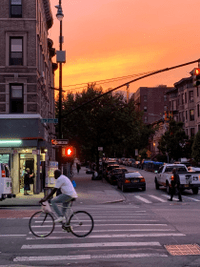
8th Ave and President St


I’ve spoken many an angry word about this topic, but after reading this article (link below) all I could think was, we all need to be careful.

The Brooklyn Paper: A jarring reminder of a dead biker

2 Comments


I work for you (but I don’t work for you)


6 Comments

Let’s get something straight - you and me. I work for you. I am contractually obligated and have a fiduciary responsibility to you. Just you. I promise to always have your best interest at heart. I am your agent and you are my client. This is even true if I don’t like you (rarely) or you don’t like me (occasionally). I take our relationship very seriously and I always explain it carefully so you will too. What you tell me in confidence always stays between us - you and me. If you tell me you will accept less than the asking price or that, for some reason, you need to sell your home immediately - that stays between us - you and me. Anything you tell me that would reveal your negotiating position is just between you and me. These things are never revealed to the other side - the other you - the you who I am about to address.

Now as for you. I don’t work for you. I work with you. You are not my client, you are my customer. We have no contractual agreement and my only obligation to you is to treat you fairly and honestly. I take this particular obligation very seriously, and always fulfill my end of the bargain. I usually like you, and we often get along swimmingly and you can trust me. However, none of that changes that I don’t work for you. So, please don’t ask me if the owner is negotiable, or what can you get this place for. Those questions are all going to get you the same answer. The answer is that I work for the seller, and I take that obligation very seriously, and because of that I’m not going to answer those questions. However, if you need to know if the seller is negotiable, or how much you can get a property for, then make an offer. I promise to present your offer to the owner promptly, and get back to you with his or her reply. And this, in no uncertain terms, will answer your question.

Me? I’m a broker. I work for you. That is, the you who is selling your home and you, who has signed a contract with me. My job is to get you the best price for your place -. the absolute best price that the market will bear. I take my job very seriously. On the other hand, I don’t work for you. You, who has a lot of agents telling you that you should only work with them, that only they can find you the perfect home, that they are your agent, that they are your broker, that they are your best friend. Me, I don’t understand how they can say this to you. They have never signed a contract with you, they know that New York State law says that they don’t work for you, and they know who they really work for. They know that we all work for the seller. But that’s just me, telling you and you, like it is. Thanks for reading.

6 Comments


Pre-Qualify Yourself


1 Comment

By far the most effective strategy for moving a sale from accepted offer to contract is to be prepared - a.k.a do your homework, a.k.a have all your ducks in a row - or as we are calling it here: pre-qualify yourself.

What does it take? Being pre-qualified means that you have an understanding of your financial affairs, your papers are organized in such a way that you could sign a contract within a week (if you had to), and you have identified your real estate team. Specifically,

  • and most importantly, hire a lawyer. If you are a buyer you need to do this before you begin shopping for a home. If you are the seller you need to do this before you put your property on the market. For more on this see What Happens Now?
  • You have made, or accepted, the offer in writing. This is not a binding contract; this is just the offer, in writing, to cut down on the ambiguity. Why in writing? Here are some things that I have actually heard people say - “that’s not what I offered;” “I only said 10% down;” and “no, I meant $559K, not $595K.” If you are the seller, you should have a pre-printed Offer to Purchase Form ready to be filled out. If you are the buyer, you should have your own Offer to Purchase Form, in case the seller doesn’t have one. At a minimum you should fax or e-mail the other party the following information: your contact information; the offer amount; the amount of down payment; where the down payment is coming from? (i.e. is it coming from the buyers’ savings or are they borrowing it); and any contingencies (i.e. the buyers need to sell their own property/home in order to purchase the one at issue).
  • If you are a buyer, you have obtained a pre-qualify letter from a bank or mortgage broker. If you are the seller, you will ask the buyer for this - if he or she doesn’t have it, then the sale is a no go (unless of course the buyer is paying all cash, in which case you just won the lottery!). Besides having a letter to present to the seller, this process will inform you about how much of a house you can afford.
  • If, you wish to inspect the property before going into contract then you have hired an engineer. This means that you have spoken to them and they are aware that you may be scheduling an appointment soon.
  • You have sat down and gone over your finances - for example, if you plan on liquidating assets to put toward the down payment, you know what is involved and how long the lead time is.
  • You have located the documents you will need to give the mortgage lender, such as pay stubs and bank statements.

There is a lot more that can be said on this topic, so feel free to leave your own tips/suggestions as a comment at the bottom of this post. Thanks for reading, Jim.

1 Comment


Hi, my name is Jim, I Live in Park Slope, and I Own a Car


4 Comments

Three years ago, when my wife and I began dating, she would slog her brother’s pickup from Red Hook, where she lived, to Park Slope, where I lived, because her 100 pound Shepherd/Rotti mix was not permitted on the B61. Then, only two months into the relationship, long before I ever said, “I love you,” and while she was still a relatively poor law student, she bought the 1994 Honda Civic that we still have today. The car cost $2500. How she knew that I, at that stage of our relationship, a 43 year old confirmed bachelor, warranted such expenditure, is a testament to just how fantastic she is, how fortunate I am, and a post for another day. For today, the point is I own a car and I live in Park Slope.

(For those who don’t know, let me premise the following by saying that Park Slope and cars — or more specifically Park Slope and parking — go together as well as Rosie and The Donald. The neighborhood is nicknamed No-Park Slope. Google, Parking “Park Slope” and you’ll get no less than 284,000 hits.)

I use the car almost exclusively for work these days. My job entails a lot of driving and a lot of parking: metered parking, alternate side of the street parking, running into the office to get a set of apartment keys double parking, waiting in front of a fire hydrant to pick up the photographer parking, not knowing you left the car in front of a church or private school parking, coming back to your spot, finding your car missing, thinking it was stolen and finding out it was f$%#ing towed parking, amongst other categories of parking. Since the acquisition of the Honda, I have contributed inordinately to the city’s coffers - over $3,000 inordinately that is. And it is this fact that uniquely qualifies me to present you with the following revelations:

(Sadly, as I scribe this using Cafe Sutra’s free WiFi, I have to run out to feed the meter…I’m back)

Parking Mantra: Be pessimistic.

Stop believing that life is fair, stop wishing things will work out, and stop hoping that maybe this time you won’t get a parking ticket. Face it - the city is on their game (I’m not happy about it, just stating the facts). Park illegally, give them the opportunity, and they will write you a ticket. My advice: prepare for the worst and have a plan. Read on.

The Tao of Parking: Take your time.

Relax, slow down and park the way God intended us to … legally. Give yourself a little extra time and you’ll be able to avoid parking where the city says you can’t. To demonstrate my point, the statisticians at From The Stoop, have carefully recorded empirical data over the last three years and have calculated the following:

  • You have a 31% chance of getting a ticket within 10 minutes of an expired meter.
  • The odds go up significantly after the 10 minute mark.
  • You will receive a ticket more often for not moving your car during alternate side of the street parking then any other violation. (Think of it this way, if the DOT hired you to catch fish (i.e. parking violators), and you knew that in a specific cove (i.e. block), of a specific lake (i.e. neighborhood), at 11:01 AM every Tuesday, you could catch no less than 11 lunkers, wouldn’t you fish there every Tuesday at 11:01 AM and take the rest of the day off?)
  • 23% of people will actually claim to observe the ticket being written and placed on their windshield.
  • 43% of the 23% mentioned above will claim to have told off the ticket writer.

Point is, relax, drive safely, drive slowly, and park legally.

Parking tip #1: Save your quarters.

Nough said.

Parking tip #2: Employ the Double Time rule.

Sub-tip 1: Fill the meter for twice the amount of time you expect to be there. It’s a lot cheaper then the ticket. (25 cents per one-half hour as of this writing.)

Sub-tip 2: Always double the estimated time it takes to get to your car. Car parked 5 minutes away? Give yourself 10.

Parking Commandment: Thou Shalt Not Forget…

Again, from empirically gathered data, I know that the number one cause of expired meter and alternate side of the street parking tickets is a lost track of time. Solution: set an alarm. If you’re high-tech, set a reminder in your Palm or Blackberry. Want to go low-tech,? Get an egg timer. And, just as importantly, don’t wait to set it or put it off because…you’ll forget! Don’t make, or return, or answer a phone call. Don’t run into the office to get out of the rain. Don’t reach into your ashtray for a quarter. Don’t do any of these things before you set the alarm - because if you do, (remember empirical data) you won’t set it. Always set the alarm first and then do the other things.

There’s more I could write (including how to fight your tickets online), but this is already a long post. Please forward your own parking tips my way. I still need all the help I can get. Thanks for reading, Jim.

4 Comments


Take Five


1 Comment

Thinking about real estate in Park Slope Brooklyn

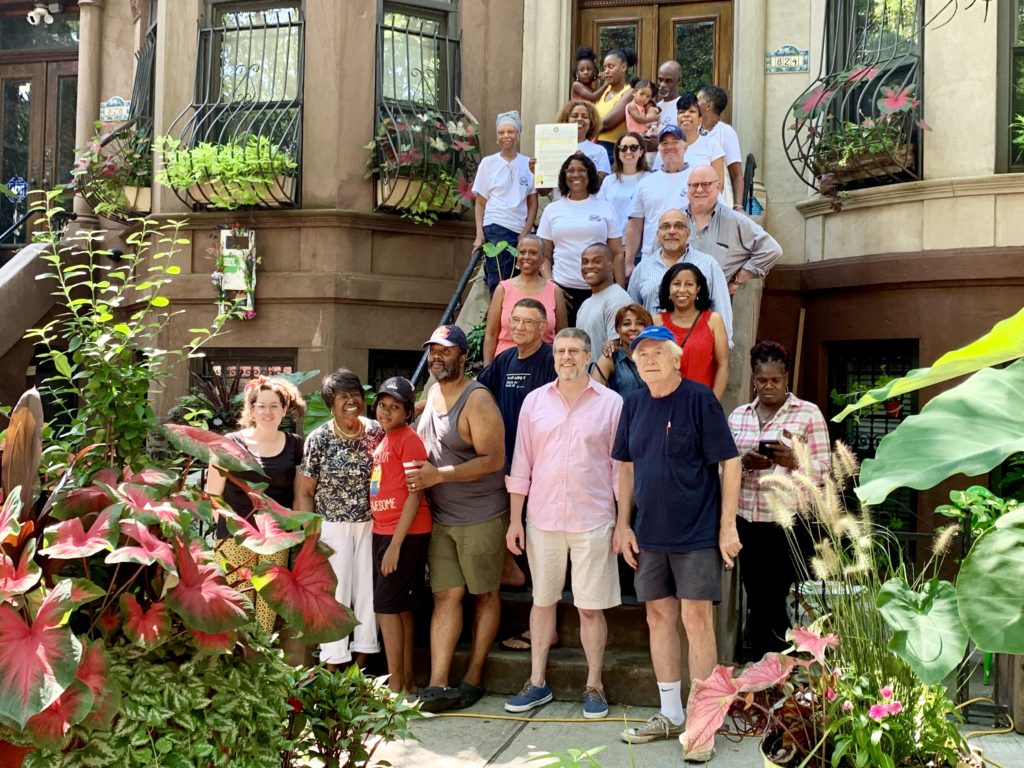
The author demonstrates the Take Five method

People often solicit my opinion about a given neighborhood. “Is it safe?”,they ask. “How is the area? What are the locals like?”, etcetera, etcetera,… I flat out try to evade these questions and I have my reasons. For one, I’m very fond of the neighborhoods I work in and don’t feel capable of answering objectively (It would be like bad-mouthing a family member to an outsider). For two, other than the number of times I’ve been fleeced by the Department of Finance (see How to Park It), I don’t worry all that much about crime in my neck of the woods. And three, the locals question? I don’t even want to know what people are getting at there. So I don’t answer any of these questions. But this is what I do say. I say, “because everyone has a different comfort level when it comes to these things, you need to explore the neighborhood yourself. That means more than just a cursory look. You need to take five extra minutes with some of the residents and get to know them. Doesn’t matter how you do it, but you need to engage a few locals. Ask for directions or the best place to get coffee. Say good morning or good afternoon. Whatever it is, just talk to people. If you do this, I guarantee, that if you really do this, you will see the neighborhood and you will see the entire city of NY in a very different light.”

I can hear the collective moan coming over the big T1 line in the blogosphere. You are out of your mind Jim. This is New York City! You can’t just talk to people on the street. You’ll scare them, or they’ll be suspicious, or they’ll get mad. My experience has taught me otherwise. When I first started exploring Crown Heights, I would stop random people on the street and ask them what they were paying for rent. If anyone asked why, I would simply say that I was thinking of buying a three family building in the neighborhood and wanted to know what I could lease the apartments for. And you know what? People talked to me. They were friendly. They were nice. They were very helpful. I even got invited into someone’s apartment to have a look. I couldn’t believe it either, but I learned a valuable lesson about my city. Nowadays, I almost always say hello, good morning, and good afternoon and my neighbors usually say it back.

So you want to know about a neighborhood? Take five extra minutes and get to know its residents. Thanks for reading, Jim.

1 Comment


Be Careful


2 Comments

8th Ave and President St


I’ve spoken many an angry word about this topic, but after reading this article (link below) all I could think was, we all need to be careful.

The Brooklyn Paper: A jarring reminder of a dead biker

2 Comments